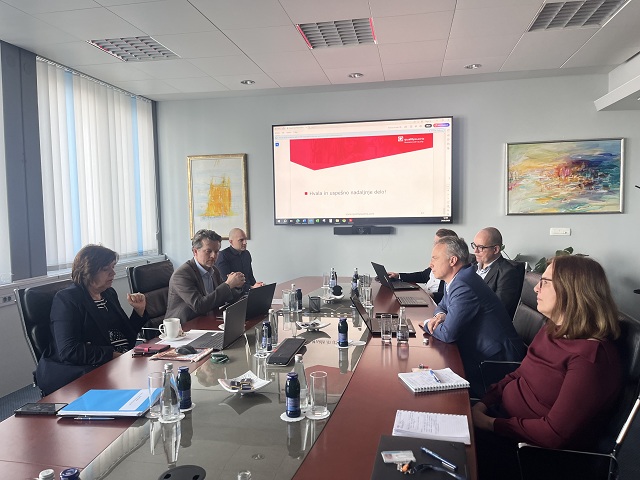
One of the key strengths highlighted by the assessors was the high level of transparency and traceability in managing the area of gifts, particularly due to consistent and systematic record-keeping that enables clear oversight and effective risk management. They also gave positive feedback on the enhanced Business Partners Code of Conduct through which the organization not only reinforces its own integrity standards but also actively promotes them within the broader business and partnership environment.
In addition, the assessors provided several recommendations for further strengthening the anti-corruption system. Among the most notable were the expansion of the Anti-Bribery Management System (ABMS) to subsidiary companies and the continued harmonization of the Integrated Management System (IMS) with all applicable standards, particularly in the areas of risk management and the conduct of internal auditing.
Special emphasis was also placed on upgrading the management review system to ensure it follows the required input data in a more structured, transparent, and consistent way. It was also recommended to develop a more comprehensive, risk-oriented training plan in the field of anti-corruption activities, tailored to the risk levels of individual job positions, as well as to continue training internal assessors to enhance their understanding of overall process operations and the internal controls associated with them.
The assessors also emphasized the importance of systematically developing, documenting, and monitoring the effectiveness of internal controls, which the organization has already been successfully implementing to some extent but should integrate even more consistently into key business processes. Particular attention should also be given to the systematic identification of significant business partners and affiliated companies that operate on behalf of or for the company, as well as to appropriately influencing them in terms of compliance with anti-corruption requirements.
The successful completion of the assessment thus confirms the maturity of our anti-corruption system and provides a solid foundation for its further improvement and the long-term strengthening of a culture of integrity within our organization.