In his opening remarks, Deputy Prime Minister and Minister of Infrastructure and Energy Jernej Vrtovec emphasised that the Port of Koper is important not only for Slovenia, but also for numerous countries in its hinterland. He highlighted the importance of cooperation among the North Adriatic ports and of broader regional connectivity, and recalled the substantial investments being made in the development of the port and railway infrastructure. Among these, he particularly highlighted the second track of the Divača–Koper railway line. In his view, the Adriatic’s true advantage lies in its role as a strategic link between north and south, and east and west, while greater connectivity must also contribute to greater resilience.
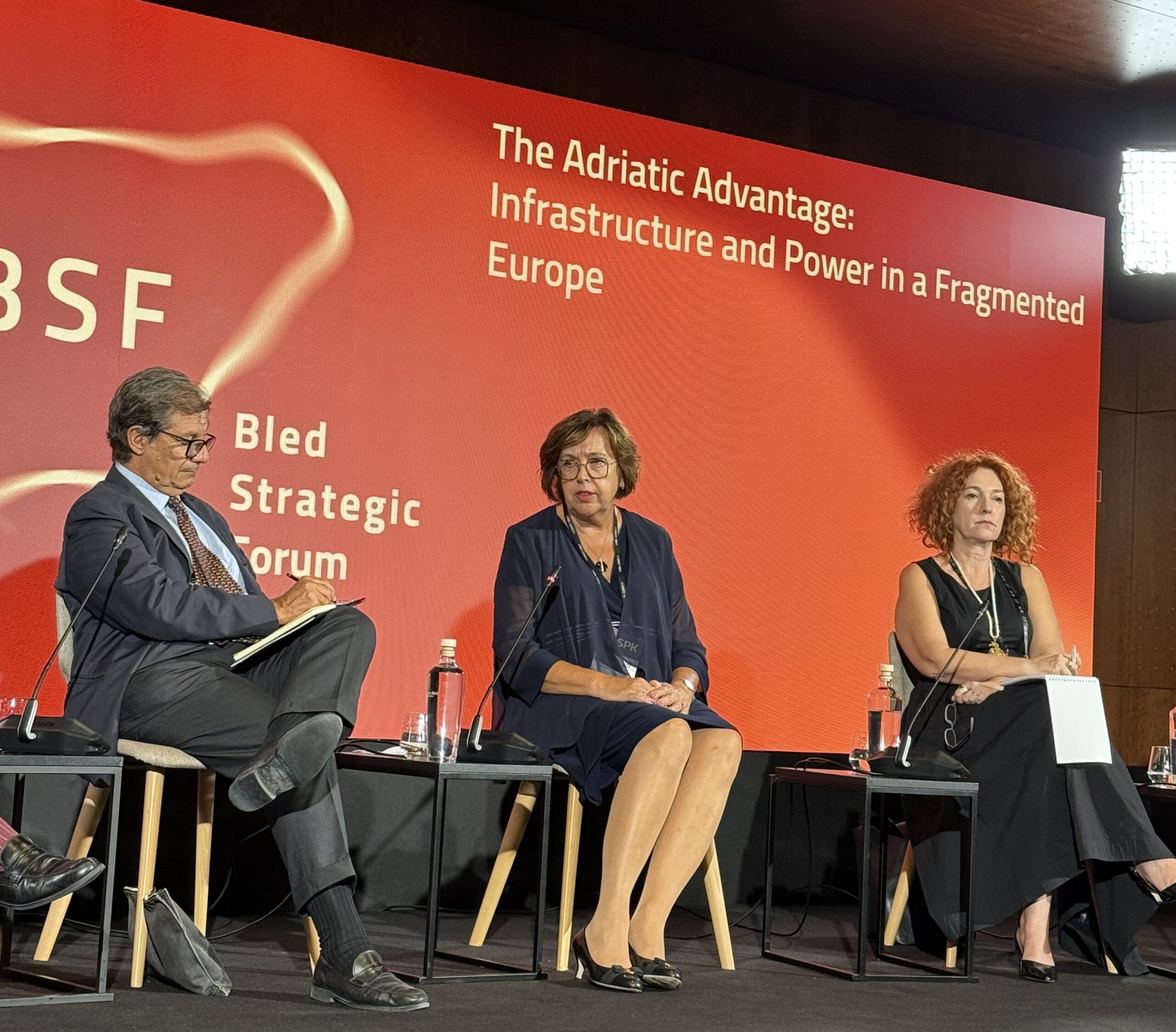
The President of the Management Board of the Port of Koper Nevenka Kržan emphasised the significant potential of the North Adriatic ports, which serve a broad European hinterland through their transport connections. Their combined throughput shows that there is still considerable room for further growth, while, amid increasing disruptions to global supply chains, reliability of supply is becoming a key priority. She also highlighted the importance of cooperation among ports within the NAPA association, as the North Adriatic ports share numerous strategic advantages.
At the same time, Ms. Kržan stressed that the Adriatic should not be positioned as an alternative to or competitor of the Northern European ports, because Europe needs both. The geopolitical and logistical disruptions of recent years have highlighted the vulnerability created by excessive dependence on individual transport routes, ports or supply chains. The growth of the North Adriatic can provide Europe with additional capacity, shorter transport routes to key markets in Central and Eastern Europe, and greater diversification of supply chains.
The Adriatic’s advantage therefore lies in the combination of its favourable geographical location, development potential, existing infrastructure and shipping connections, strong links with the hinterland, operational expertise, and ability to adapt quickly to changing circumstances. The North Adriatic can therefore serve as an additional strategic gateway, strengthening the resilience of the European transport system as a whole.
In addition to Ms. Kržan, the panel featured George Hajipavli, Programme Coordinator for the Eastern Mediterranean at St. Antony’s College, University of Oxford; Maurizio Maresca, Professor of International Law at the University of Udine; Francesco Maria Talò, Special Envoy for the IMEC Economic Corridor at the Italian Ministry of Foreign Affairs and International Cooperation; and Romana Vlahutin, Special Envoy for Strategic Connectivity and Croatia’s national coordinator for the Three Seas Initiative. The discussion was moderated by Valbona Zeneli, a member of the Europe’s Futures Fellow initiative and Senior Fellow at the Atlantic Council.