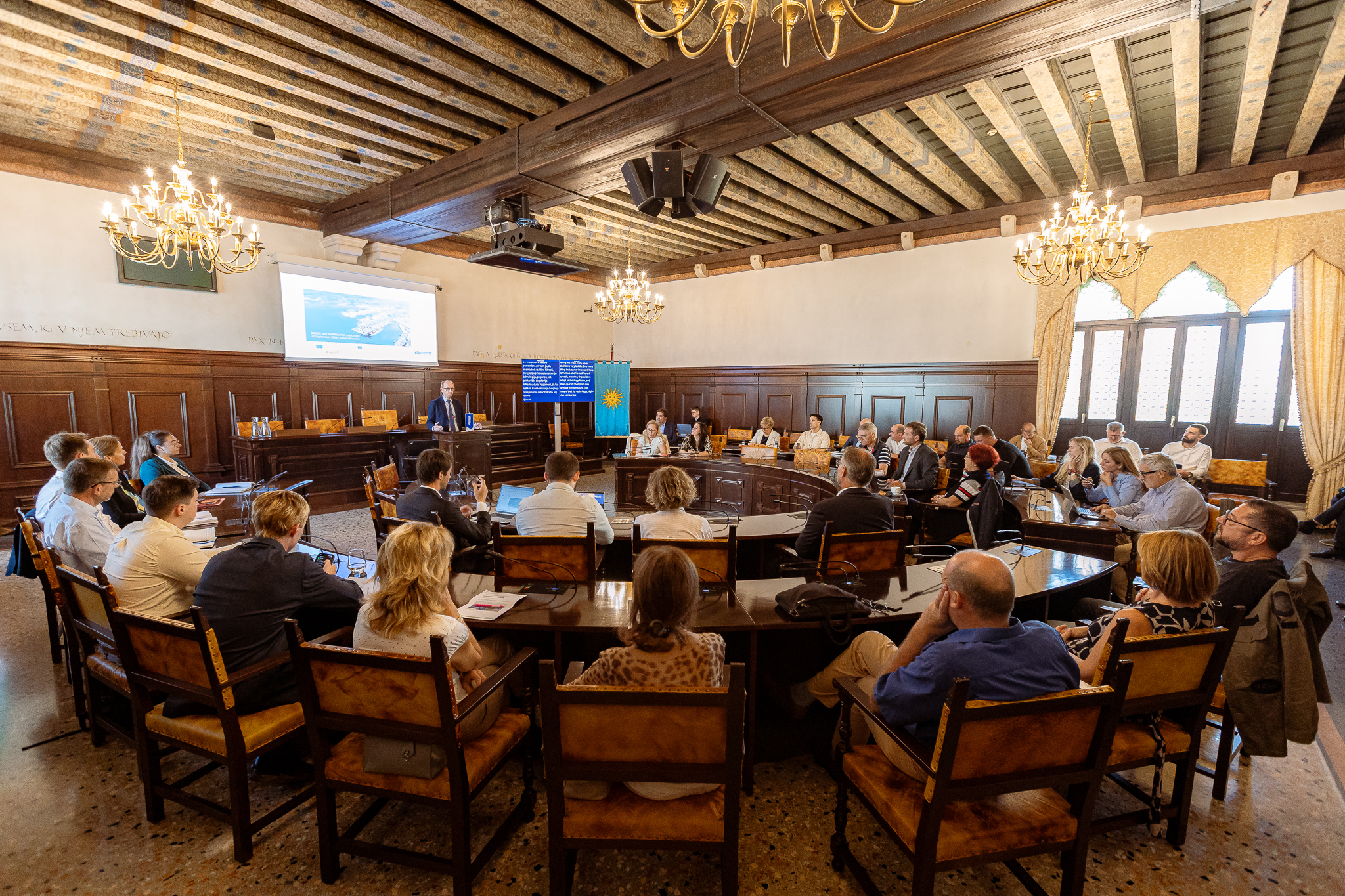
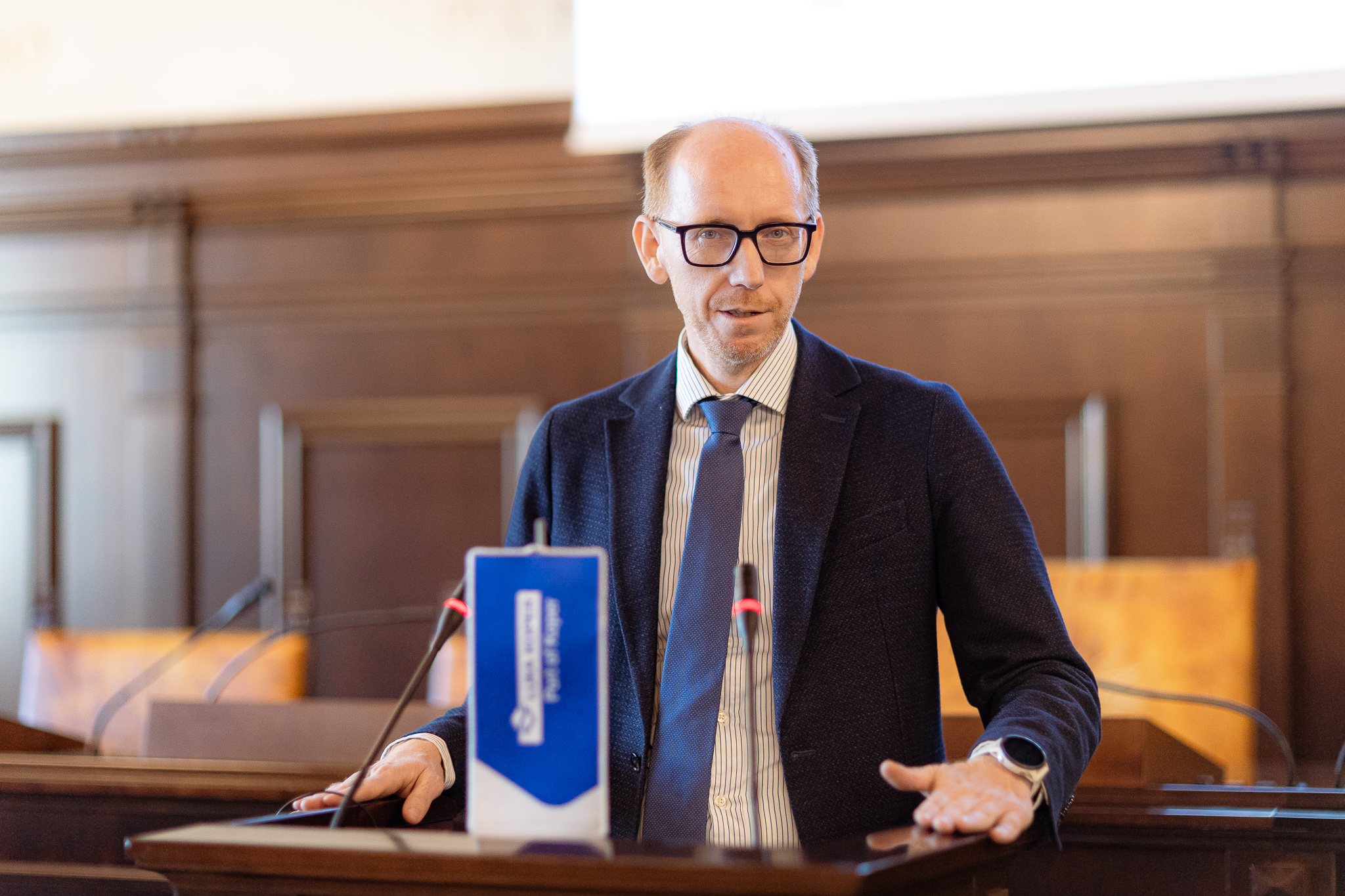
As Vojko Rotar, Member of the Management Board and Workers’ Director, emphasised at the opening of the event, these are long-term and investment-intensive decisions that are difficult to change once made, making knowledge and the exchange of experience crucial to the decision-making process. “Investments in port and maritime infrastructure that will enable the energy transition and the use of future energy sources are highly capital-intensive and long-term. This is why expert meetings are an important compass for making responsible strategic decisions and help reduce the risks of making the wrong decisions,” Rotar said in his opening remarks. These are not merely individual economic projects, but projects of broader national importance, as, in addition to reducing emissions, they contribute to a higher quality of life, greater reliability for business partners, and greater resilience for the countries developing such infrastructure. He added that questions surrounding the supply of electricity to ships and the use of alternative fuels are no longer abstract discussions about the future, but increasingly concrete requirements to which ports must prepare in good time.
The Port of Koper is a project partner in two European projects that address these issues from different perspectives. BREEZE (Berth Electricity for Zero Emission in Ports) brings together nine partners from eight European countries and focuses on the exchange of knowledge and good practices, as well as on identifying technical, business and regulatory solutions for the more effective deployment of onshore power supply (OPS) for ships. SUPERALFUEL, meanwhile, focuses on alternative fuels in maritime transport, particularly on questions related to their safety, feasibility and sustainable use in ports across the Adriatic-Ionian region.
Aleš Bržan, Mayor of the Municipality of Koper, pointed out that the energy transition also has a very direct local dimension for Koper. “For us, the transition to more sustainable maritime transport is a question of quality of life in the city, the port’s long-term competitiveness, and the future of the wider area,” he emphasised. In his view, the development of the city and the port cannot be considered separately. Looking ahead, it will not only matter how much cargo the port handles, but also how that cargo is transported and what the environmental impacts are.
Tina Sinkovič Mutec from the Ministry of Infrastructure and Energy presented the European and national legislative framework for establishing alternative fuels infrastructure, including the requirements of the EU Alternative Fuels Infrastructure Regulation (AFIR), under which TEN-T network ports must ensure adequate capacity for onshore power supply to ships by the end of 2029. The draft national policy framework envisages four onshore power connection points for container ships with a combined capacity of 20 MW and two for passenger ships with a combined capacity of 22 MW in Koper. A key prerequisite for establishing this infrastructure, however, is a new 110/20 kV distribution and transformer substation and an appropriate connection to the transmission grid.
Participants at the event also had the opportunity to hear about the experience of ports that have already implemented OPS. Dr. Sicco Rah from the Hamburg Ministry of Economic Affairs, Labour and Innovation, and the lead partner of the BREEZE project, emphasised that there is no single technical solution that can be applied to all ports. Ports differ in terms of their spatial conditions as well as their energy grids, management structures and business models. Hamburg began introducing OPS as early as 2016.
When it comes to alternative fuels, the picture is still much more open. Prof. Ernesto Salzano of the University of Bologna, who presented the activities of the SUPERALFUEL project, pointed out that the sustainability of new fuels cannot be assessed solely in terms of their environmental impacts. “We are talking about a much broader perspective – one that takes into account safety, economics, environmental impacts and the actual feasibility of individual solutions,” he emphasised, adding that an important part of the project also involves training the people who will be working with these new fuels in the future.
Dr. Peter Vidmar, Dean of the Faculty of Maritime Studies and Transport, also highlighted the changes taking place in maritime transport. Ships powered by alternative fuels are already arriving in ports, while supply chains and port infrastructure are not adapting to the new requirements at the same pace. He pointed out that, alongside technical solutions, safety and the social acceptance of new technologies will also be crucial, particularly in ports located directly adjacent to urban areas. Early communication, transparent risk assessments and appropriate employee training will therefore be essential.
Andrej Hrabar, Environmental Manager at Luka Koper, presented the concrete steps being taken at the Port of Koper to prepare for the introduction of OPS. The port’s current connection capacity is approximately 10 MVA, while future requirements are estimated at around 80 MVA, making new energy infrastructure one of the key prerequisites for further electrification. “The main benefits of OPS will be reduced emissions and noise. Since we live very close to the port, this is also important for the local community,” he emphasised. At the same time, questions remain regarding the future business model – from system management and financing to setting electricity prices for ships.
Luka Koper is also preparing for the energy transition by electrifying port equipment, increasing its own electricity generation from solar power plants, and implementing other measures to reduce energy consumption and emissions. When it comes to alternative fuels, however, the discussions at the event also highlighted that the key priority is to build up knowledge and develop the necessary expert studies and supporting documentation in good time. At present, it is not yet possible to reliably predict which fuels and technologies will ultimately prevail in maritime transport over the long term.
This is precisely what the BREEZE and SUPERALFUEL projects are intended to support. They do not involve the construction of infrastructure, but rather the exchange of knowledge, the assessment of different technical and business models, the preparation of safety analyses and expert studies and supporting documentation that will enable ports and other stakeholders to make future investment decisions.