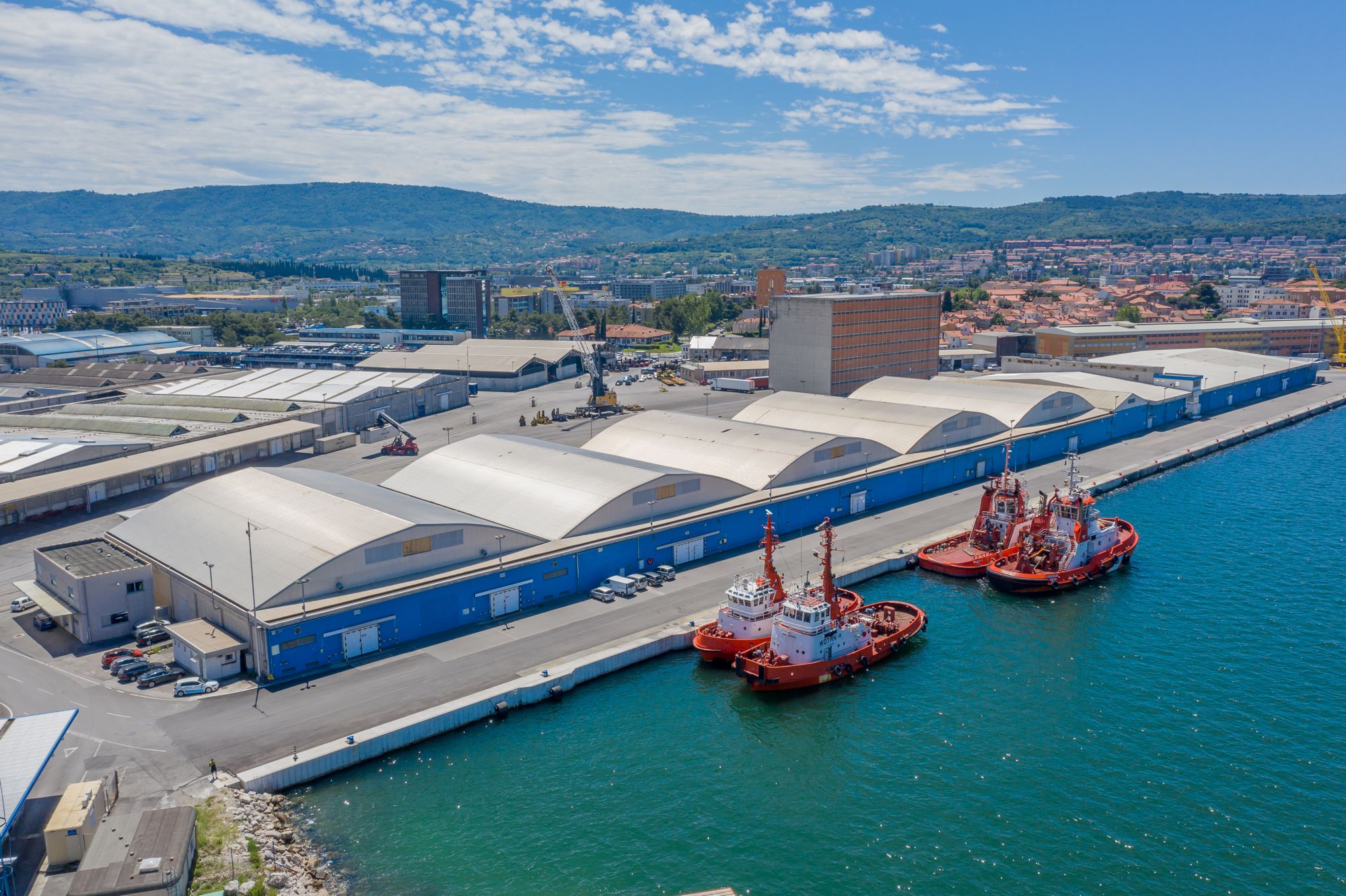
As part of the upgrade, the number of engine rooms will be reduced from six to three, with the new units offering greater efficiency and improved environmental performance. Following the example of more modern systems already in use in adjacent conditioned warehouses, the terminal will introduce an indirect glycol-based cooling system, which will reduce the required amount of ammonia by a factor of eight and completely eliminate the use of freons. The project documentation also includes a fire safety assessment and an explosion risk analysis. The renovation will be carried out in two phases – during the summer and autumn periods of this year and next, when terminal activity related to perishable cargo is typically lower.
Renovated and safer refrigeration facilities
22. 9. 2025
At the Reefer Cargo Terminal, specifically in Warehouse No. 5, the modernization of the refrigeration systems has been underway since the beginning of the summer.